Human Resources has always been central to building strong organizations. AI avatars now take HR processes to a new level, reshaping recruitment, onboarding, employee engagement, and training. The same technology that powers these HR assistants is what small businesses, agencies, and founders use to build an AI chatbot for their own website.
Below is how AI avatars are making HR more efficient, more personalized, and less biased, and what that means for your team.
Key takeaways
- AI avatars are applications that use AI to simulate human interactions.
- They strengthen HR functions from onboarding and recruitment to engagement and training.
- They improve employee experience and support organizational success.
- Key challenges are data privacy, resistance to change, and integration with existing HR systems.
- Future trends include better natural language processing, VR and AR integration, and predictive workforce analytics.
What are AI avatars in HR?
AI avatars are digital assistants that use AI to interact with people. They simulate conversations, surface information, and complete tasks based on user queries. They can appear as an AI chatbot, a voice assistant, or a humanoid robot, giving HR a more engaging and intuitive interface.
Global AI adoption by organizations is forecast to grow at a 36.6% CAGR between 2024 and 2030. AI avatars sit at the front of that shift, turning traditional HR practices into faster, more effective systems across four areas:
- Talent acquisition: identify and engage candidates more efficiently.
- Employee onboarding: give new hires essential information and resources from day one.
- Learning and development: deliver personalized training that builds skills.
- Employee engagement: improve communication and feedback so people feel valued.
As digital transformation continues, AI avatars are becoming essential tools for HR teams, freeing professionals to focus on strategy while the avatar handles routine tasks.
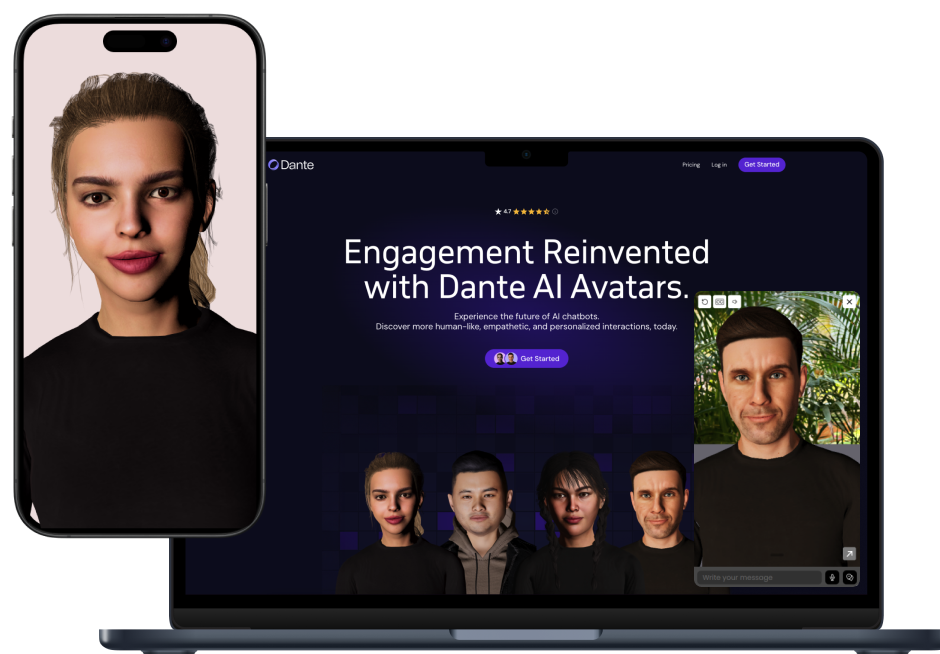
Benefits of AI avatars in HR
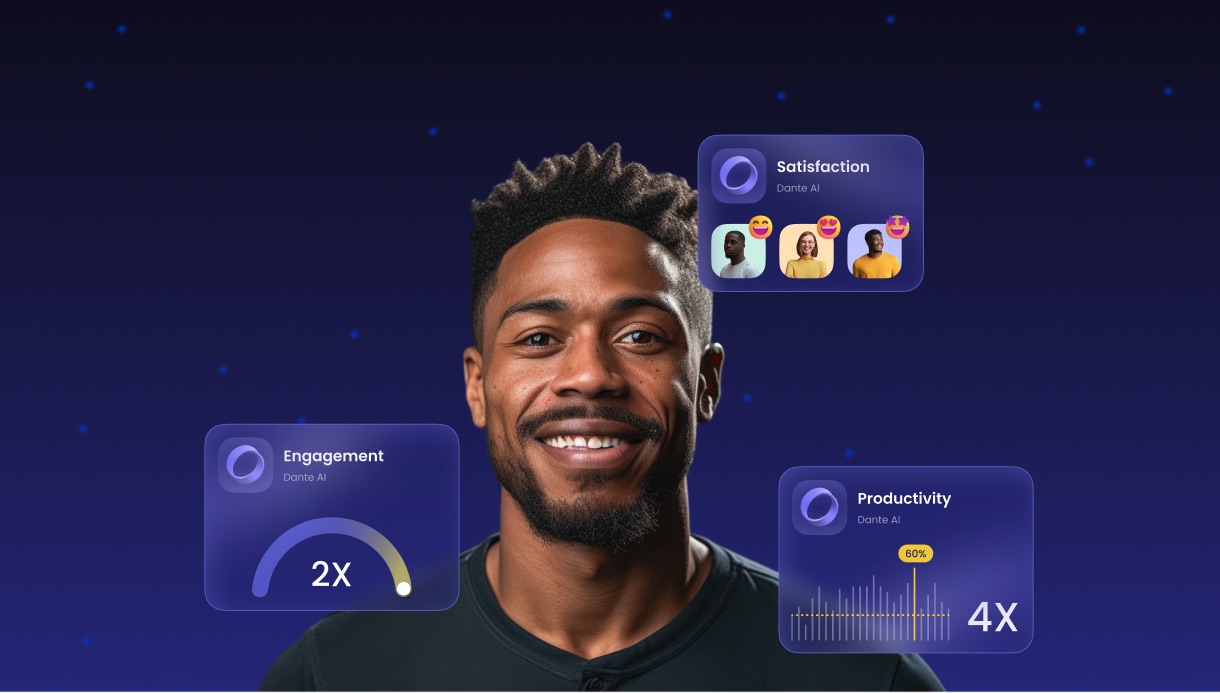
AI avatars revolutionize traditional HR practices, improving onboarding, recruitment, engagement, and ongoing development.
1. Improving employee onboarding
Onboarding sets the tone for a new hire. Organizations with a standardized onboarding process see 50% greater new-hire productivity. AI avatars enhance this with personalized guidance: they answer common questions, explain company policies and procedures, and provide real-time help for a smoother first week.
2. Enhancing recruitment
AI avatars automate time-consuming recruitment tasks. They can analyze resumes, run initial interviews, and surface qualified candidates, helping HR make informed hiring decisions. They also promote fairer, more inclusive hiring by reducing manual effort and bias, with companies reporting a 20% reduction in recruitment costs when using AI.
3. Boosting employee engagement
AI avatars boost engagement through personalized interactions and support. They deliver timely, relevant information, run pulse surveys to gather feedback, and connect employees with HR, fostering open communication and a more satisfied workforce.
4. Continuous training and development
AI avatars create customized training programs based on individual needs, monitor progress, and give real-time feedback, supporting professional growth and job satisfaction.
Enhancing onboarding with AI avatars
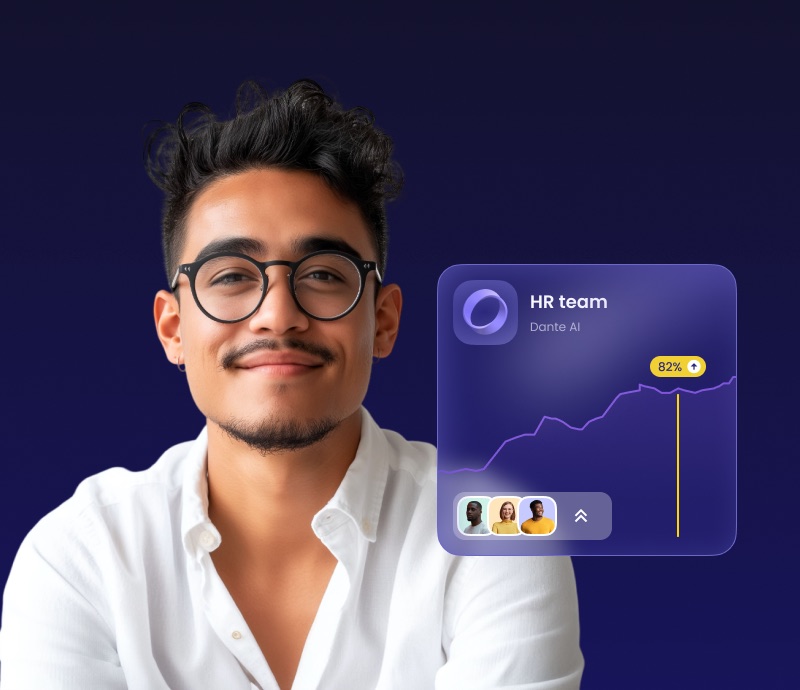
Strong onboarding can increase retention by 82%. AI avatars deliver personalized experiences, real-time support, and seamless HR integration.
Personalized onboarding experiences
AI avatars tailor onboarding to each employee, analyzing needs, preferences, and learning styles to serve custom content. This helps people feel valued and engaged from day one.
Real-time support and assistance
AI avatars provide real-time support throughout onboarding. New hires get instant answers about policies, procedures, and their role without waiting for human intervention.
Integration with HR systems
AI avatars integrate with existing HR systems, pulling from HR databases, automating documentation and compliance, and equipping new hires with the resources they need. This saves time and keeps onboarding accurate and consistent.
AI avatars in recruitment and hiring
AI avatars are reshaping candidate assessment by automating screening, conducting first-round interviews, and reducing bias:
- Automated resume screening: analyze resumes against set criteria, surface top candidates, and keep screening fair and unbiased.
- Initial interviews: use natural language processing to ask tailored questions, analyze responses, and rate candidates consistently.
- Reduced bias: remove personal identifiers so decisions rest on qualifications and merit, supporting a more diverse workforce.
Boosting engagement through AI avatars
Virtual HR assistants
Virtual HR assistants powered by AI answer queries, help employees navigate HR policies, and support HR processes at any time, streamlining the employee experience.
Interactive employee feedback
AI avatars turn rigid feedback into interactive conversations. Employees share input and get targeted responses, building a sense of involvement and ownership.
Internal communications
AI avatars send announcements, deliver real-time updates, and support virtual meetings, ensuring information reaches everyone clearly and on time.
Continuous training and development
AI avatars offer personalized learning paths, skill assessment, and progress tracking. As of 2023, 36% of AI applications focused on employee training and collaboration.
Personalized learning paths
By analyzing strengths, weaknesses, and preferences, AI avatars recommend the courses and materials most relevant to each employee, so people get exactly the training they need.
Skill development and assessment
Through simulations and role-play, employees practice in a safe environment with real-time feedback. Avatars run skill assessments, surface gaps, and highlight development opportunities, helping organizations target their training investment.
Tracking and reporting progress
AI avatars capture data on completed courses, assessments, and performance, letting HR and L&D teams monitor progress and make data-driven decisions about what is working.
Challenges and solutions
Adopting AI avatars in HR comes with hurdles, from data privacy to change management.
Ensuring data privacy and security
AI avatars collect and analyze large amounts of employee data, so robust encryption and security are essential. Adhering to regulations like GDPR or CCPA keeps you compliant and builds employee trust.
Read more: Dante AI's commitment to security: ensuring data privacy in AI
Overcoming resistance to change
Some employees fear AI avatars will replace human interaction or their roles. Involve people early, train them on the benefits, and show clearly how avatars enhance rather than replace human capabilities.
Integrating with existing HR systems
Compatibility and data synchronization can be obstacles. Work with IT or vendors and use APIs and data connectors to integrate AI avatars so they can access employee information across HR platforms.
Future trends of AI avatars in HR
- Better natural language processing: avatars will handle detailed queries, performance evaluations, and coaching.
- VR and AR integration: more immersive training, simulations, and virtual meetings.
- Predictive analytics: insights into behavior, performance, and attrition to support workforce planning and retention.
Conclusion
AI avatars are transforming HR by streamlining processes, improving efficiency, and personalizing the employee experience. As NLP, VR and AR, and predictive analytics mature, these interactions will only get richer, helping organizations build a more engaged, efficient, and future-ready workforce.
The same no-code technology lets small businesses, agencies, and founders build a custom AI chatbot for their own site. Build your custom AI avatar today with Dante AI, or see how Dante AI can power your HR department.
Further reading
Keep going with these guides from the Dante AI library: